


Orchestrating work and business context is the new AI challenge
Andrew Murphy at jaam automation looks at the change from AI assisting staff and improving what workers can do, to AI taking action and making decisions to drive the business forward


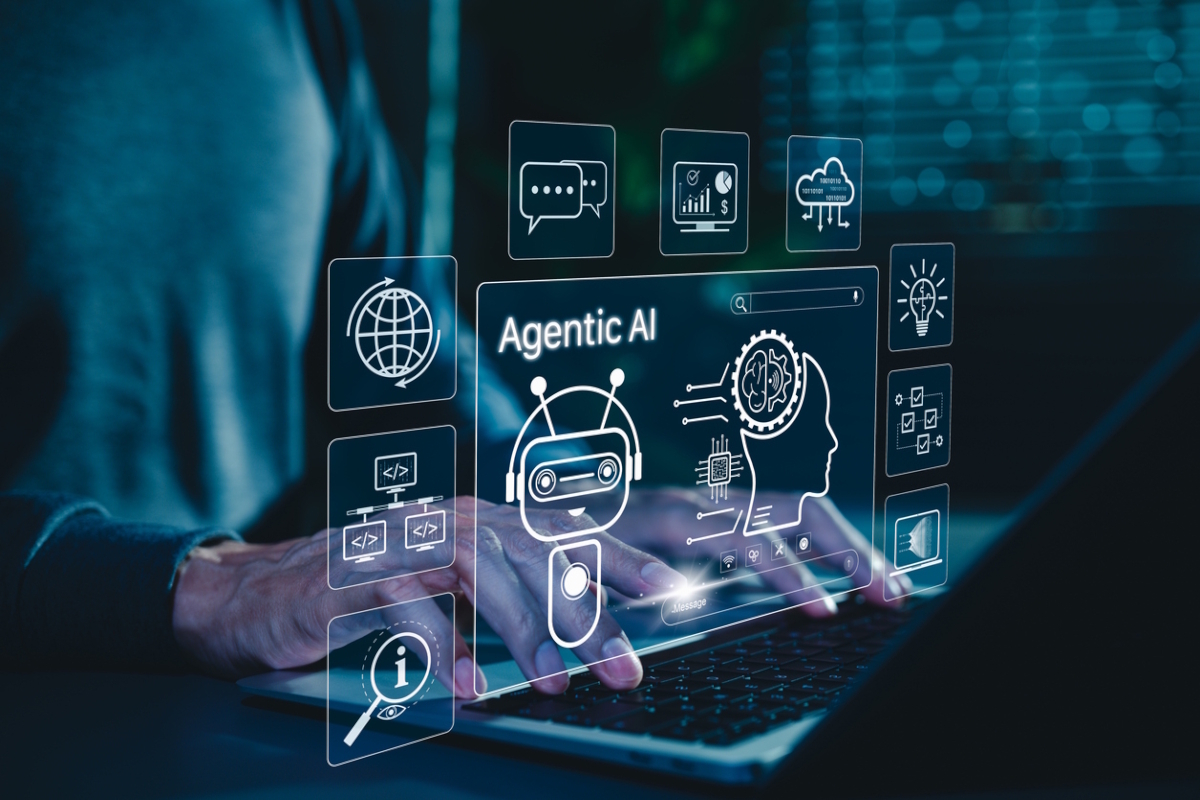
As AI agents move from assisting people to taking action, businesses face a new challenge: coordinating work across humans, agents and systems. Agentic Work Management could be the next step.
Until now, most businesses have been asking what AI can help their people do. The more interesting question is what happens when AI starts doing things for them.
That shift is already underway. AI is moving beyond generating content and answering questions towards systems that can make decisions, take actions and move work forward with less human intervention. While that promises significant productivity gains, it also creates a new challenge: how do you manage work when the people doing it are no longer all people?
The scale of adoption is considerable. McKinsey’s research found that 88% of organisations are using AI in at least one business function, compared with 78% the previous year. Yet only 7% said their organisation had fully scaled AI across the business. The gap between adopting AI and changing how an organisation actually works is becoming increasingly important.
Giving people access to AI is relatively straightforward; however, the harder part comes when AI starts acting across the organisation.
A customer request, for example, might involve a person, an AI agent, several business systems and decisions made by different teams. If one element changes, everything that follows may need to change with it. The work no longer sits neatly within one application or workflow, and cannot necessarily be managed through the rules used for traditional automation.
This is where Universal Orchestration becomes important. As businesses introduce more AI agents, automation and digital workers, they need to coordinate work across them, as well as the people and systems already in place. Without that coordination, organisations risk adding another layer of complexity, with more intelligent tools operating independently but no clearer view of how everything fits together.
Traditional automation is designed around defined processes: a task happens, a rule is applied, and the next step follows. Real work is rarely that predictable - priorities change, information arrives late, exceptions occur, and decisions in one part of an organisation affect what happens somewhere else. People have always navigated this through context and judgement. As AI takes on more responsibility, technology will need to account for that complexity too.
This is the territory of Agentic Work Management (AWM). It is not simply about managing AI agents, but managing work when people, systems and agents are all part of getting something done. The focus shifts from individual tasks to the work as a whole: what needs to happen, who or what should do it, what information is relevant and when human judgement is needed.
One example is Auxiga’s next-generation award-nominated Oversight Portal, to help motor finance providers manage oversight across dealer and broker networks. The service brings operational work, people and AI agents together, with agents supporting activities such as reviewing attestations, checking documents, identifying inconsistencies and highlighting areas requiring human attention.
Crucially, these activities are carried out in context, drawing on relevant client, policy, process and historical information. It is a practical example of AI becoming part of a real, regulated business process rather than operating as a separate tool alongside it.
The direction of travel is clear. Microsoft’s 2025 Work Trend Index found that 81% of leaders expect agents to be moderately or extensively integrated into their company’s AI strategy within 12 to 18 months. Gartner predicts that at least 15% of day-to-day work decisions will be made autonomously through agentic AI by 2028, compared with effectively zero in 2024.
As that happens, context will become increasingly important. An AI system can be highly capable and still make the wrong decision if it does not understand what is happening around the work. Relevant information may sit across different systems, previous conversations or decisions made earlier in the process. For AI to take on more responsibility, organisations will need better ways of connecting that context to the work itself.
This could also change the role of workplace technology. Rather than asking employees to navigate an increasing number of applications, workflows and AI tools, technology should increasingly understand the work that needs to happen and coordinate activity across the systems, people and agents involved.
For decades, software has largely been organised around applications, with people moving between them to get work done. Agentic AI creates the possibility of organising technology around the work instead, with people and AI taking on different parts of the same outcome. The organisations that benefit most from this shift will not necessarily be those with the most AI tools or the greatest number of agents. They will be those that can make these capabilities work together, with enough context to know what needs to happen and enough orchestration to keep the work moving.
AI has already changed the tools we use to work. The bigger change now is how we manage work when intelligence itself becomes part of the workforce.
Andrew Murphy is Chief Strategy Officer and Co-Founder at jaam automation, helping organisations automate complex business processes while maintaining the control and oversight they need
Main image courtesy of iStockPhoto.com and Supatman
Your Next Read

Related Content
2025 Privacy Benchmarks: AI readiness and winning movesSPONSORED ARTICLE
2026 Revenue Revolution: Addressing Six Critical B2B ChallengesSPONSORED ARTICLE
4 key steps to prepare for post-quantum cryptographySPONSORED ARTICLE
Supply Chain Talk
view all
Why unified, AI-powered supply chains are pulling ahead - and what the rest risk losing


Connecting the supply chain - Why the yard matters more than ever
Winston House, 3rd Floor,
Units 306-309, 2-4 Dollis park,
London, N3 1HF
020 8349 4363
© 2026, Lyonsdown Limited. teiss® is a registered trademark of Lyonsdown Ltd. VAT registration number: 830519543