



AI Talk: Engineering intelligence at the physical edge
On 24 March 2026, AI Talk host Kevin Craine was joined by Pontus Fontaeus, Executive Design Director, GAC R&D; Fabio Albanese, Head of Appliance Engineering Platform, Electrolux Group; and Anurag Jain, Vice President and Global Head, AI Engineering, HCLTech.
Views on news
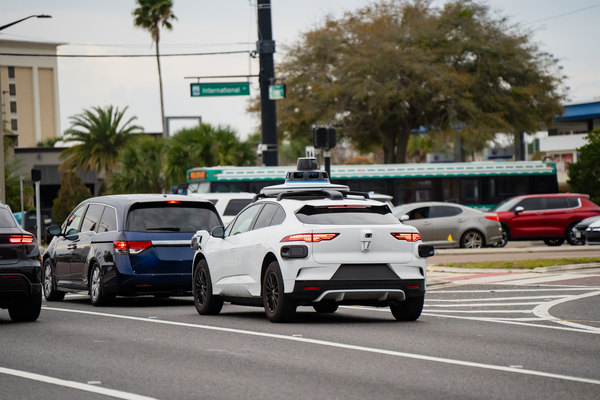
Breakthroughs in hardware, artificial intelligence and vision systems are giving rise to “physical AI” – robotic systems capable of perception, reasoning and autonomous action. Three complementary robotics systems are emerging that will coexist in the target state: rule-based, training-based and context-based robotics. Yet scaling intelligent robotics requires more than technology.
The paper highlights the need to embed a new physical AI technology stack, forge ecosystem partnerships and invest in workforce transformation. In physical AI, accuracy thresholds must be set much higher than in software AI. In safety critical areas, even 99.9% success rates may not be good enough. That’s why physical AI, where safety and security is much more emphatic, can be an area where Europe can shine with its strong roots in manufacturing and a robust regulatory framework.
Moving from pilots to deployments at scale
The number one challenge in physical AI is striking a balance between accuracy and optimisation. In non-mission critical deployments, optimisation can be prioritised, but when human lives are at stake, accuracy reigns supreme. Repeatability and scalability of solutions are metrics key to deciding whether deployment can get beyond the pilot stage. Business impact is also important for proving that AI can deliver the KPIs agreed on with the C-suite previously. In design, the period from ideation sketch to a visual that can sell a design is critical and so is transferring the model from 2D to 3D.
How humans interact with machines today is still very rule-based and “robotic.” But the most typical barrier with scaling cutting-edge physical AI systems is integration with legacy infrastructure. The certification of these solutions is highly complex thanks to extensive supply chains and the fact that software often includes open source code too. For real world deployments to be successful, you need a system-oriented approach, where experts of different scientific fields collaborate. For safety, real-time control (the ability of a system to compute and execute actions within strict time constraints) and actuation limit (the physical, mechanical, or electrical boundaries of hardware that restrict what the AI can actually do) must be core components of edge AI systems.
These two are the critical constraints that bridge the gap between digital "thinking" and physical "acting," enabling AI to operate safely and effectively in the unpredictable real world. Another way to boost their safety is to integrate a supervising agent into the process, where a more traditional control system validates the decision and action the AI is about to take. Edge and gen AI combined with agentic AI has great potential. While the collection of data takes place at the edge, the same data can be sent to and get analysed in the cloud by LMs and LLMs for insights on machine behaviour. Agentic AI then can make recommendations or take action based on these insights.
The panel’s advice
- Edge AI that performs well in a lab environment can be overwhelmed by real-world conditions.
- Physical AI systems are never plug and play.
- It’s key for model safety and compliance to design a graceful degradation path, ensuring a system remains functional and accessible at a reduced level of performance during a partial failure or high load.

Business Reporter Team




Most Viewed


Winston House, 3rd Floor, Units 306-309, 2-4 Dollis Park, London, N3 1HF
23-29 Hendon Lane, London, N3 1RT

020 8349 4363

© 2025, Lyonsdown Limited. Business Reporter® is a registered trademark of Lyonsdown Ltd. VAT registration number: 830519543