



Supply chains are entering the era of modular AI-native platforms
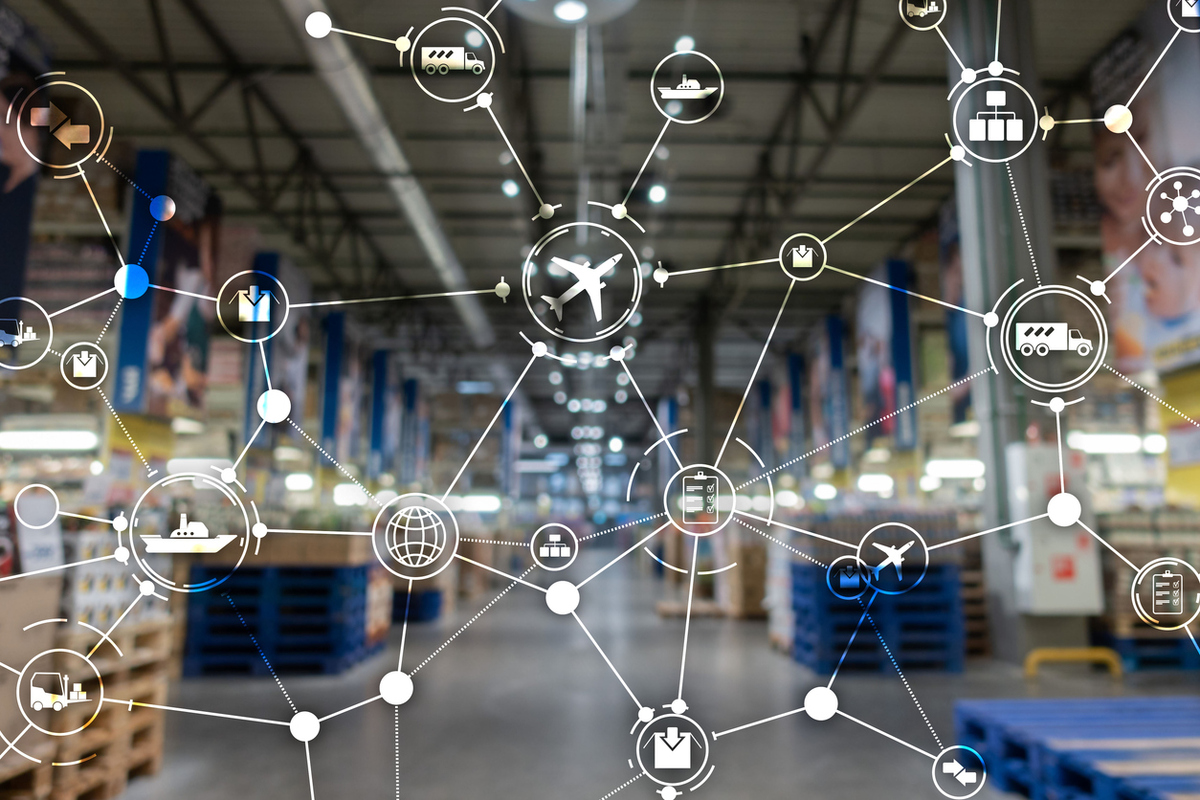
For years, supply chain technology has been built around functional excellence. Transportation was optimised in one system, network design in another, inventory planning somewhere else, and risk monitoring layered on top. Each function improved individually.
Yet the supply chain as a whole often remained fragmented. Data moved across silos. Decisions were optimised locally but not globally. Complexity accumulated quietly until disruption exposed it.
In conversations with supply chain executives across industries, one pattern consistently emerges. I recently asked a senior leader, “How many systems are involved in running your supply chain?” He paused before answering, “A lot. Too many.”
That hesitation reflects a structural reality. Over time, organisations made rational investments. They added planning tools to improve forecast accuracy. They implemented optimisation engines to reduce freight spend. They deployed control towers to increase visibility. They created regional instances to meet local requirements. Each decision solved a real problem. Collectively, they created structural complexity.
Today, the issue is not a lack of technology or expertise. It is the realisation that complexity itself has become a strategic risk. When disruption hits, fragmentation becomes visible immediately. Teams move between systems, reconcile conflicting data and manually assemble the information needed to make decisions. “We have strict supplier standards,” said one organic food producer. “Finding a new supplier quickly is not always possible, so we have to reallocate materials across plants.” A logistics leader in CPG company told us, “We have systems in place, but they are not giving us the responsiveness or optimisation we need. We manually replan for cost, service level, and risk.” During a hurricane Helen, another executive reflected, “When there is a crisis, decisions need to be quick and accurate. Even with many tools, we still pulled reports manually and stitched information together.”
At the same time, executive expectations have become clearer. Leaders want straightforward answers: Where should we optimise? What is the impact? How quickly can we act? They are cautious about multi-year transformation programs that require significant upfront investment before measurable results are visible. COOs, CIOs and CSCOs are showing healthy scepticism of technology promises that are not directly tied to tangible business outcomes. Too many transformation initiatives fail because they are not anchored in measurable economic value.
This is why we see the industry entering a new phase: modular AI-native platforms for end-to-end supply chains.
AI-native does not mean adding algorithms on top of existing systems. It means building on a shared data model that connects network strategy, planning, logistics execution and risk domains into one integrated foundation. It means creating an architecture that can expand through integration with ERP and advanced planning systems, strengthening prior investments rather than replacing them.
It also represents a shift from project-based optimisation to embedded continuous optimisation. Traditionally, optimisation has often been delivered through discrete initiatives supported by expert consulting teams. These engagements remain essential for defining strategy, redesigning networks and solving complex structural challenges.
What is changing is how operational decisions are supported day to day. Instead of episodic projects, AI-native platforms embed optimisation into ongoing workflows. Signals of disruption are sensed early. Trade-offs across cost, service and resilience are evaluated in near real time. Decision-ready insights are delivered directly to business users.
Equally important is the combination of AI with human expertise. Supply chains are not purely mathematical systems. They are shaped by supplier relationships, regulatory constraints, customer commitments and commercial priorities. AI can evaluate thousands of scenarios in seconds and quantify potential impact. Human expertise brings contextual understanding, judgment and accountability. Together, they enable better and faster decisions than either could achieve alone.
Implementation models are evolving as well. The desire for rapid answers during disruption is often followed by a practical question: what did it cost to achieve that result? Large-scale programs that require significant upfront investment are increasingly difficult to justify without near-term ROI.
Modular platforms address this through a phased, use-case-driven rollout. Organisations can begin with a focused proof of value delivered within 90 days. Measurable outcomes such as logistics cost reduction, inventory improvements or productivity gains that reduce manual effort from hours to minutes build credibility. From there, additional modules can scale on the same data foundation. This ROI-first approach reduces risk, shortens time to value and aligns investment with tangible business impact.
Successful adoption requires partnership. Technology alone is not sufficient. Solution providers and organisations must work together to define clear outcomes, align cross-functional stakeholders and build joint implementation roadmaps that support adoption across the business. Platforms must be embedded into real workflows and supported by practitioners who understand both operational complexity and strategic ambition.
It is also important to recognise something fundamental: global supply chains are strong. Executives today are not surprised by volatility. Geopolitical shifts, tariff changes, supplier instability and climate events are no longer viewed as anomalies. Continuous volatility is increasingly embedded into strategic planning. Leaders are building resilience deliberately.
The role of modular, AI-native platforms is to strengthen supply chain resilience. By connecting domains end to end, embedding continuous optimisation and combining AI with human expertise, organisations can respond faster, evaluate trade-offs more clearly and scale decisions with confidence.
The next era of supply chain will not be defined by adding more systems. It will be defined by smarter architecture, modular implementation and integrated decision environments. Those foundations will allow global supply chains to not only withstand volatility, but to grow through it.
Follow us on LinkedIn for updates, insights, and the latest supply‑chain news.
Explore our solutions, success stories, and upcoming events on our website.
by Natalia Andreyeva, Vice President, Market Strategy, 4flow

Business Reporter Team



Most Viewed


Winston House, 3rd Floor, Units 306-309, 2-4 Dollis Park, London, N3 1HF
23-29 Hendon Lane, London, N3 1RT

020 8349 4363

© 2025, Lyonsdown Limited. Business Reporter® is a registered trademark of Lyonsdown Ltd. VAT registration number: 830519543