



Bridging the dashboard divide: Why business observability is the missing link in digital transformation
Sponsored by Dynatrace


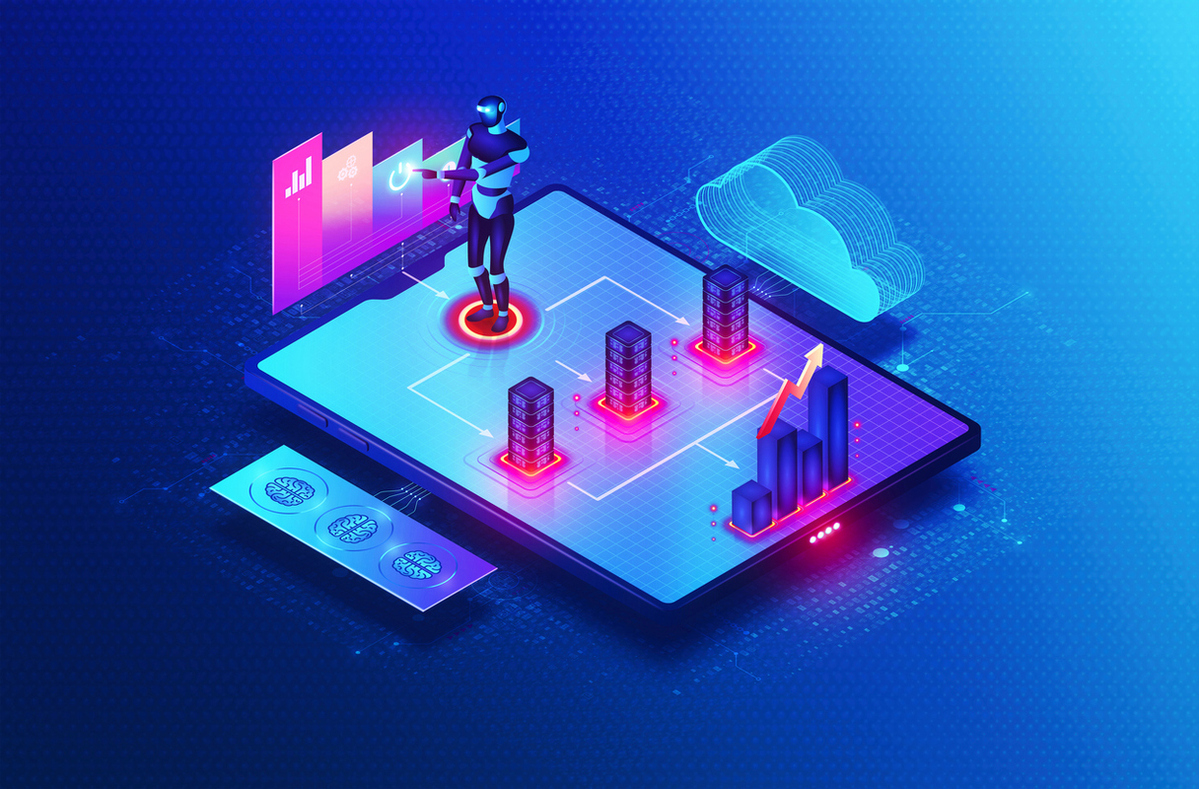
Senior technology and operations leaders from banking, healthcare, retail and manufacturing convened at a recent dinner briefing hosted by Dynatrace to explore one of the most persistent challenges facing modern enterprises: the disconnect between IT metrics and business outcomes. What emerged was a candid, far-reaching exploration of observability gaps, AI adoption realities, customer experience imperatives and the cultural barriers that prevent organisations from truly understanding what’s happening inside their digital operations.
Rather than dwelling on theoretical frameworks, the discussion anchored itself in real-world deployments, operational frustrations and the growing recognition that technical uptime no longer equates to business success. The result was a revealing snapshot of where enterprise observability truly stands today - caught between legacy reporting practices and the transformative potential of AI-driven insights.
The two-dashboard problem
A recurring theme throughout the evening was what one participant termed the "two-dashboard conundrum": the persistent separation between IT performance metrics and business KPIs. As one delegate articulated, "I would go in with my IT dashboard showing all my servers are up, 99.9% availability, transactions looking good. But then the business operations team says their dashboard is red because revenue is down, as that 0.1% downtime happened to fall on Black Friday.”
This disconnect isn’t merely academic. A retail banking example brought it into sharper focus: account opening rates were falling, and the initial assumption was that poor IT availability was to blame. But once the organisation was able to trace the full journey end to end - from customer interaction through to application performance and conversion - a more accurate picture emerged. The issue was not system instability, but friction within the digital experience itself. That level of visibility made it possible to focus attention on the right problems, improve the journey and, in turn, increase account openings and mobile app satisfaction.
The lesson was clear: without the ability to trace business outcomes back through digital transactions to underlying infrastructure, organisations are left guessing - often incorrectly - about root causes.
From static reports to real-time intelligence
Many participants acknowledged that their current approach to business monitoring remains remarkably manual. Weekly business reviews, spreadsheet-based reporting, and retrospective analysis dominate, even in organisations processing substantial transaction volumes. "We do a lot of observability, but it’s canned, static," admitted one fintech executive. "Our business monitoring is very manual, and it doesn’t join together with our technology platforms.”
The aspiration is clear: real-time visibility that connects customer journeys, system performance, and revenue impact. One participant recalled building an in-house, real-time monitoring system capable of tracking every account, every cash balance and every transaction across $16 trillion of daily activity. But such bespoke solutions are expensive to build and maintain - and most organisations won’t or can’t make the investment.
Modern observability platforms, particularly when combined with emerging AI capabilities, point to a different model - one in which this intelligence is no longer confined to specialist teams. By bringing technical telemetry together with business context, organisations can start to understand which issues matter most, where the consequences are likely to be felt, and how to create a more shared view across technology, operations and the business. Several participants also noted the growing relevance of agentic AI in this context: not simply in identifying anomalies, but in helping teams investigate patterns, explore likely causes and surface possible actions through more accessible interfaces. As one technology leader observed, "For the first time, with the invention of MCP and natural language interfaces, you can actually put rich, technical information into real people’s hands, and it actually makes sense to them.”
Customer experience as the North Star
Across industries, the conversation repeatedly returned to customer experience as the ultimate measure of digital success. An NHS representative highlighted the parallel with patient experience: "We can reduce referral-to-treatment times, but what is the patient experience while they’re waiting? Do they know if they’re on a waiting list? Do they feel informed? Do they have routes to communicate?”
The NHS App case study proved instructive. From three million users before the pandemic to 31 million afterwards, the application’s potential to transform healthcare delivery is enormous, but only if the experience matches consumer expectations set by banking apps and e-commerce platforms. Ministers now explicitly benchmark NHS digital services against retail banking experiences, asking why biometric authentication and seamless navigation aren’t standard.
A participant who had worked with the Abu Dhabi government’s TAM app - a single platform which integrates all 49 government entities - described an approach where customer satisfaction scores, not ROI metrics, drove every decision. "Everything was driven by CSAT. If a user gave a low score, someone would ring them within half an hour and ask why." This relentless focus on experience, enabled by end-to-end visibility, offers a model for what’s possible when observability extends beyond technical metrics.
AI: accelerator or RISK?
The conversation inevitably turned to artificial intelligence, both in its transformative potential but also its risks. Participants described a spectrum of adoption, from organisations with no AI capabilities ("we have laptops with Copilot buttons that do nothing when pressed") to those embedding AI agents at the heart of development pipelines.
The practical benefits were evident: one consultancy reported reducing development cycle times by 50x while shrinking team sizes by 20x through AI-assisted code generation and automated testing. Another described uncovering $2 million in revenue leakage within 45 minutes by using natural language queries against their observability platform - a task that would have previously required deep platform expertise.
Yet caution pervaded the discussion. Several participants warned of moving too quickly and too broadly. "We saw the light at the end of the tunnel too soon. We started throwing things in far too quickly," admitted one executive who had implemented extensive automation, only to find that incident response capabilities atrophied when human engineers were no longer regularly exercised. "When they did get called 10 days later, they seemed to have lost their mojo.”
For healthcare specifically, the calculus is particularly fraught. AI-assisted diagnosis for stroke and lung cancer is being deployed across NHS trusts, but a human clinician retains final authority over every clinical decision. "That’s a red line for a lot of people," noted one NHS representative. "The technology is only going to get better, so where you sit on that risk balance is going to be huge.”
Cultural inertia and the path forward
Perhaps the most sobering contributions came from participants grappling with cultural resistance to change. A representative from a major manufacturing firm described walking factory floors where family ties run generations deep and any technological change is viewed through the lens of potential job losses. "They don’t want change because if it’s change, a relative is going to lose their job.”
Participants agreed that the antidote lies in targeted use cases that demonstrate value without threatening livelihoods, and in transparent communication about how AI will augment rather than replace human capabilities. "Start small, identify a proper use case you can build a business case around, and then go hell for leather," advised one technology leader. "Because if you don’t, one of your competitors definitely will."
Bridging this divide requires more than incremental improvement; it points to the need for a more unified approach to observability - one that connects technical performance more directly to business outcomes. When organisations can relate digital performance to revenue, conversion, service quality or customer satisfaction, they are in a far stronger position to act with confidence. That, in essence, is what business observability offers: a way of turning fragmented signals into a more coherent view of performance. As the discussion suggested, the value lies not only in better visibility, but in the ability to uncover issues that conventional monitoring can miss - whether friction in a banking journey or revenue exposure in a hospitality environment - and respond with greater precision.
The evening concluded with a recognition that observability - the ability to truly understand what’s happening across digital systems and business processes - has moved from technical nice-to-have to strategic imperative. In an era where customer expectations are shaped by the best digital experiences available, and where AI is reshaping competitive dynamics weekly, organisations that lack visibility will struggle to act decisively.
The question is no longer whether the “dashboard divide” should close, but how fast it should.

Business Reporter Team




Most Viewed


Winston House, 3rd Floor, Units 306-309, 2-4 Dollis Park, London, N3 1HF
23-29 Hendon Lane, London, N3 1RT

020 8349 4363

© 2025, Lyonsdown Limited. Business Reporter® is a registered trademark of Lyonsdown Ltd. VAT registration number: 830519543