



Designing competitiveness into the future of intralogistics
Sponsored by E80 GroupAs supply chains grow more complex, long-term competitiveness depends on how intralogistics systems are designed to evolve, perform and create measurable value over time


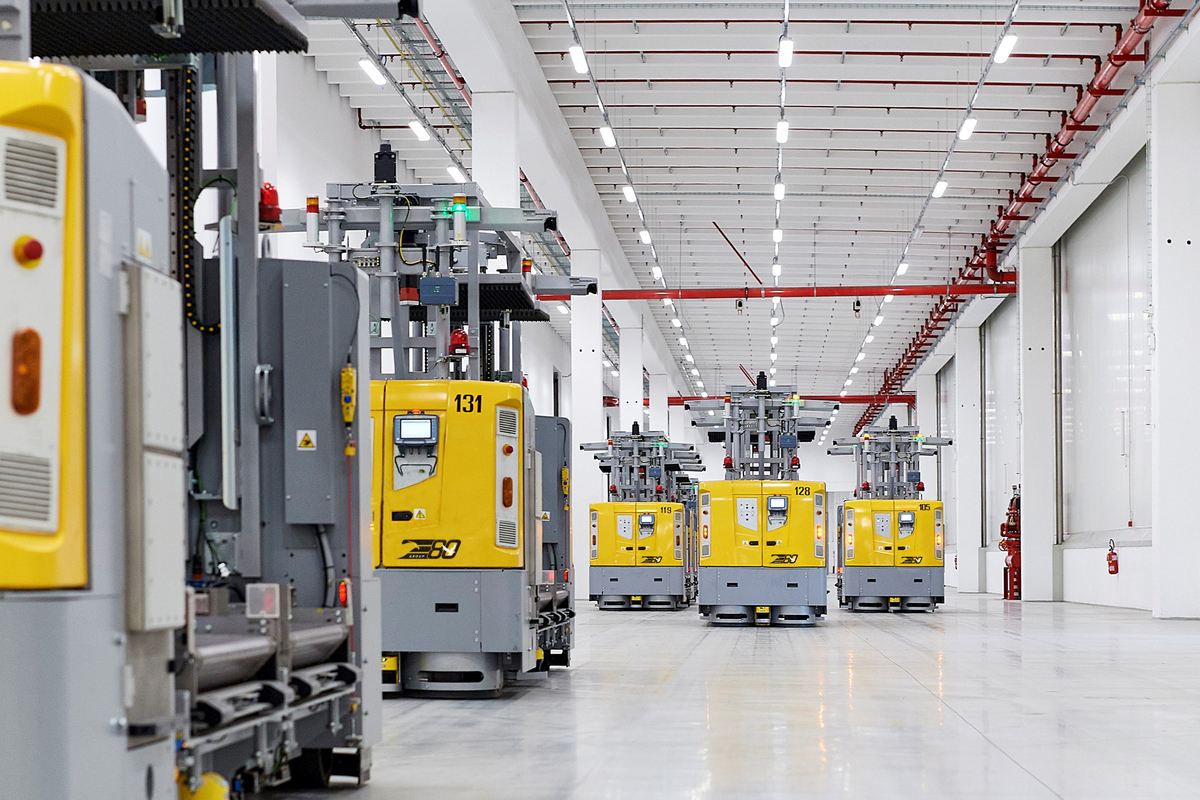
For many years, competitiveness in manufacturing and distribution was defined by return on investment.
Facilities were designed to optimise throughput, reduce costs and maximise efficiency under relatively stable conditions. Plant management was evaluated mainly on how fast those plants moved goods and how reliably they executed predefined tasks.
That logic no longer applies.
Today’s supply chains operate in an environment defined by volatility, complexity and continuous change. Product portfolios evolve faster, distribution channels multiply and operational requirements shift more frequently. In this context, the real challenge for leadership teams is no longer how to optimise today’s operations, but how to remain competitive tomorrow.
In other words, how can companies future-proof their businesses while facing today’s challenges?
This question changes the conversation entirely.
Competitiveness starts before systems go live
The ability to stay competitive over time is not determined when a facility reaches full operation. It is determined much earlier, during the design phase.
Design choices define how flexible a system can be, how easily it can scale and how well it can adapt to unpredictable future scenarios. They also determine whether performance can be measured, predicted and improved, or whether it will slowly degrade as complexity increases.
This is where digital twins and advanced simulation models play a critical role. By combining historical data, operational constraints and future growth assumptions, organisations can explore different scenarios before committing capital. They can test how systems behave under stress, how bottlenecks emerge and how changes in volume or product mix affect performance.
More importantly, they can make decisions based on evidence rather than assumptions. At E80 Group, for example, when we start the consultancy phase with a client, it’s backed up by a market awareness and a data-driven approach that draws from 40 years of experience, and which understands the importance of scalability as a key deliverable.
From execution to prediction
As intralogistics systems become more sophisticated, their value is no longer limited to execution.
Modern systems continuously generate data on movements, timing, standard utilisation and exceptions. When this data is organised and analysed correctly, it becomes a predictive, powerful, decision-making asset. It enables organisations to move from reacting to difficulties to anticipating them.
Used in the right way, tools such as artificial intelligence (AI) and advanced analytics can amplify this capability. They allow organisations to identify patterns, simulate future conditions and refine operational strategies over time. In such a model, competitiveness is built on the ability to predict and adapt, not simply execute faster.
Performance that can be guaranteed
This shift has important implications for how performance is maintained over time.
Short-term gains are no longer enough. Leadership teams need to look for systems that can guarantee consistent long-term performance, even when conditions change. That requires more than reliable equipment. It requires a system-level approach where flows, priorities and bottlenecks are continuously managed and optimised.
This creates a more meaningful return on investment – one that extends beyond immediate cost savings and supports long-term business objectives.
Not only will this result in a stronger ROI, but a new way of calculating it. Success today can be calculated through multiple parameters – sustainability, security, longevity – all of which we should take into account before calculating return on investment.
Safety is often discussed as a regulatory requirement or a cost factor.
But safety is at the core of sustainability and contributes directly to ROI – not just today, but across the entire lifecycle of the system.
That’s why we have to go beyond standard regulations and keep investing to further improve safety. It protects both people and performance, which is essential for sustaining both people’s wellbeing and competitiveness in the long term.
And while its impact can be reflected in operational results, the true value of safety cannot be fully quantified, because it ultimately concerns people – a value that goes beyond measurement.
Software as a competitive platform
At the centre of all these capabilities lies software.
For software to be a true competitive advantage, it must be more than a control layer.
First of all, it must function as a proprietary platform that orchestrates the entire intralogistics ecosystem. Such a platform needs to be open enough to integrate with external systems, yet robust enough to manage complex operations reliably.
Equally important, it must be modular and evolutive. As business requirements change, new functionalities should be added without having to redesign the entire system. Strong data analytics capabilities are essential, allowing organisations to measure performance, identify opportunities for improvement and continuously refine their operations.
This is where the role of the system integrator becomes critical. Integrating hardware, software and data into a coherent, future-ready platform requires both technological depth and a deep understanding of intralogistics processes.
Designing who you will be tomorrow
Ultimately, intralogistics design is no longer just about systems. It is about identity.
Organisations that invest in flexible, scalable and data-driven intralogistics platforms are not simply optimising operations. They are defining who they want to be in the future: how they compete, how they grow and how they make decisions.
Competitiveness is no longer something to defend but something to design and share without fear. And the ultimate ROI is becoming fast, focused and inclusive of a smart risk management.
To learn more about designing future-ready intralogistics systems, visit www.e80group.com
By Gabriele Grassi, Deputy Chairman EVP Industrial Operations, Digital Innovation & IT Managing Director, E80 Group

Business Reporter Team




Most Viewed


Winston House, 3rd Floor, Units 306-309, 2-4 Dollis Park, London, N3 1HF
23-29 Hendon Lane, London, N3 1RT

020 8349 4363

© 2025, Lyonsdown Limited. Business Reporter® is a registered trademark of Lyonsdown Ltd. VAT registration number: 830519543