



The practical path to AI in manufacturing
Sponsored by Autodesk


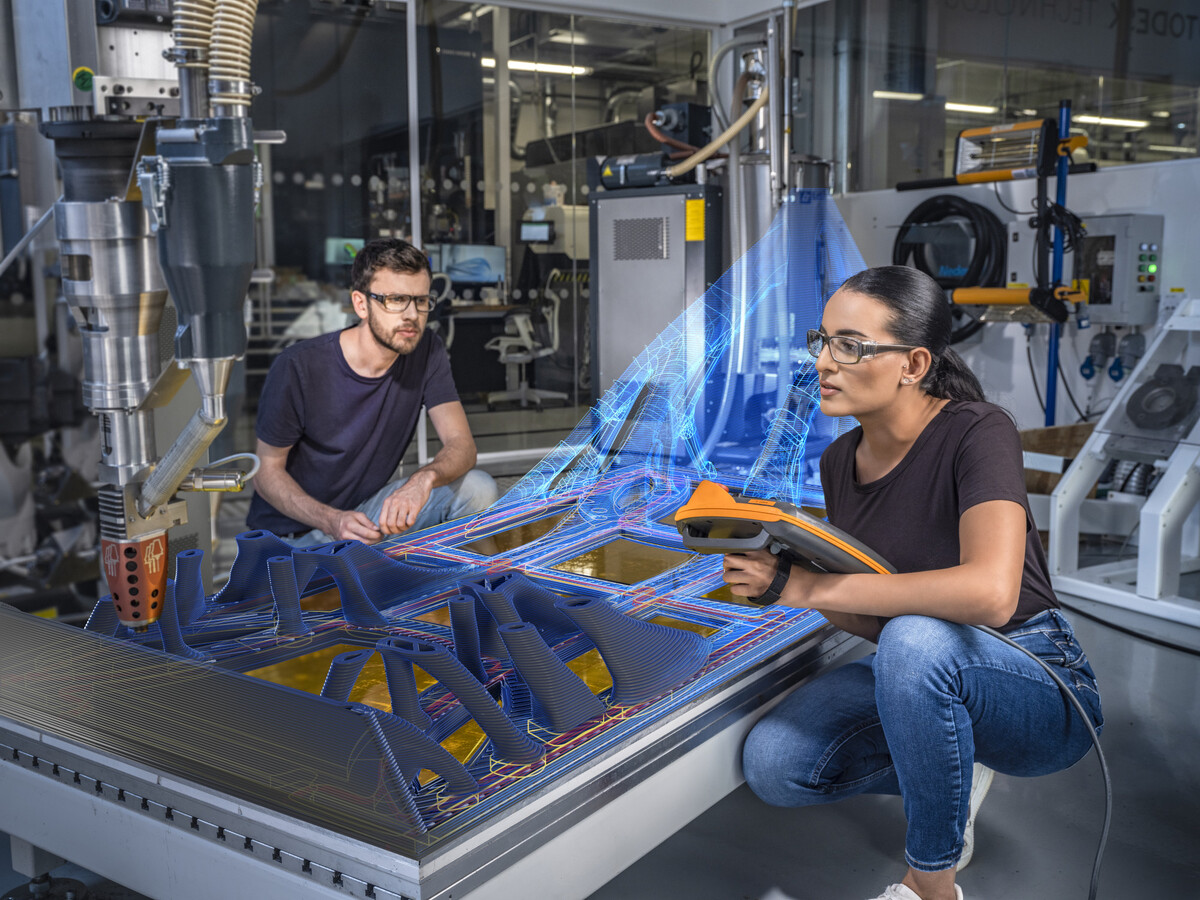
Artificial intelligence, specifically in manufacturing, is in various stages of adoption. Some see it as a trend, others as an opportunity, and most sit somewhere in between. Those in the middle are curious about AI’s potential to accelerate adoption, especially amid supply chain volatility, but they remain grounded in the realities of production schedules, legacy data and established processes that can’t afford disruption.
Realistically, there simply isn’t a one-size-fits-all solution when it comes to AI and manufacturing. Technology companies need to meet manufacturers where they are, embedding AI in meaningful ways that enhance manufacturers’ expertise. This means viewing AI less as an abstract insight and more as an execution layer, embedded directly into workflows to help teams move from intent to outcomes faster – an area where Autodesk has taken a clear lead.
From experimentation to execution on the customer’s terms
In manufacturing, AI adoption spans a wide spectrum. Some teams are focused on incremental productivity gains, while others are ready to automate more complex workflows across design, simulation, manufacturing and operations. Autodesk Fusion is designed to support that full range, allowing organisations to move from experimentation to execution at their own pace.
Rather than asking teams to rethink how they work, Fusion applies AI where it can meaningfully assist, automate and accelerate outcomes. As AI is adopted faster, teams can adapt faster, creating tighter feedback loops between manufacturing and design, shortening the time it takes to update designs, and responding more quickly to production realities. That agility matters more than ever as manufacturers navigate reshoring efforts, supply chain risk and constant change. The focus is real workflow impact, not novelty or disruption for its own sake. As AI becomes part of execution, the shift for teams is subtle but important: less time navigating tools, more time guiding outcomes. Intent stays human, while AI helps move work forward.
AI embedded where work actually happens
Autodesk Fusion has become a proving ground for practical AI in manufacturing. Instead of positioning AI as a standalone capability, it embeds AI powered features directly into everyday workflows to support designers, engineers and manufacturers as they work.
In Fusion, AI assists with design exploration, geometry generation and manufacturing preparation, helping teams move faster while preserving engineering intent. The goal isn’t to replace expertise, but to amplify it by shortening iteration cycles, reducing manual effort and enabling teams to focus on higher-value decisions. By embedding AI where work already happens, Fusion helps teams move faster and with fewer interruptions, shortening cycles without adding new tools to manage.
For manufacturers early in their AI journey, this embedded approach lowers the barrier to entry. AI becomes something you use, not something you have to adopt.
Autodesk Assistant: intelligence that keeps work moving
Momentum matters in manufacturing. Searching for answers, switching tools and second-guessing decisions slow progress and introduce risk. Autodesk Assistant is designed to remove that friction by delivering support exactly where work happens.
Built directly into Autodesk workflows, Autodesk Assistant provides context-aware guidance in real time that helps teams resolve issues, navigate complex workflows and uncover next steps without breaking concentration. Questions are answered in the moment. Decisions move forwards with confidence. Work keeps flowing. The value isn’t just faster answers. It’s fewer interruptions between question and action.
By making expertise available when and where it’s needed, embedded intelligence helps scale knowledge across teams. The result is faster onboarding, fewer handoffs and more consistent execution across design, engineering and manufacturing.
Autodesk Assistant represents a shift in how AI shows up at work. It’s not a system to manage, but a force multiplier that reduces uncertainty and tightens design to manufacturing cycles.
MCPs and agentic AI: scaling intelligence across the lifecycle
If Autodesk Assistant focuses on helping teams keep momentum in their day‑to‑day work, MCP takes the next step – enabling intelligence to carry work forwards across connected workflows. Together, they create a foundation for AI that doesn’t just advise, but acts.
For organisations further along in their AI maturity, Autodesk is laying the groundwork for what comes next. Agentic AI capabilities are designed to automate more complex workflows across the design, make and operate stages.
This is where model context protocol (MCP) becomes important, enabling AI models to access the right data, context and actions at scale. Rather than simply suggesting next steps, AI systems can begin to act, co-ordinate and optimise across connected workflows. These capabilities build on foundations customers already trust today: design data, connected platforms and cloud-enabled services. The result is less friction between decision and execution, as AI begins co-ordinating steps that would otherwise require manual handoffs.
Leadership through pragmatism, not promises
At a time when much of the industry is focused on signalling AI ambition, Fusion’s approach prioritises meaningful value. This value is delivered incrementally and transparently, in ways that align with how manufacturing work gets done. Progress is measured with tangible outputs, including throughput, quality, reliability and the ability to adapt, rather than concepts manufacturers are asked to imagine.
That mindset matters as AI continues to reshape design and manufacturing. Today, customers are adopting task-level AI because it meets them where they are, operating inside real workflows and quietly executing tasks teams would otherwise manage manually. Capabilities such as Sketch AutoConstrain in Fusion reflect this approach. Since launching last year, the model has delivered over 3.8 million constraints, up from 2.6 million the previous quarter, demonstrating steady, real-world adoption driven by practical value.
From there, the focus expands to workflow automation, where AI accelerates product development, broadens design exploration and brings manufacturability into the process earlier. The next frontier is systems automation, where platforms carry contextual awareness of engineering requirements, manufacturing options and performance constraints. At every stage, people remain in control, guiding outcomes while scaling what they can accomplish.
This is the AI trajectory Autodesk sees: task, workflow, then systems automation. Fusion is built to support that path, strengthening workflows, scaling capability and enabling adaptation without forcing wholesale change. In manufacturing environments shaped by reshoring and ongoing supply chain risk, success is judged by execution and by how quickly teams can respond when conditions change.
AI that delivers on manufacturing’s terms
AI in manufacturing isn’t a single destination. It’s a journey. Fusion’s strength lies in supporting every stage of that journey.
From AI-assisted workflows in Fusion to context guidance through Autodesk Assistant, to the emerging potential of agentic AI and MCP-driven automation, Fusion enables teams to adopt AI at their own pace, without sacrificing control, trust or results.
In an industry where progress must be both bold and practical, that may be the most important innovation of all.
By Aishwayara Balamukundan, Senior Director of Marketing, Autodesk, Inc


Business Reporter Team



Related Articles

Most Viewed


Winston House, 3rd Floor, Units 306-309, 2-4 Dollis Park, London, N3 1HF
23-29 Hendon Lane, London, N3 1RT

020 8349 4363

© 2025, Lyonsdown Limited. Business Reporter® is a registered trademark of Lyonsdown Ltd. VAT registration number: 830519543