



Digital twins, extended reality and manufacturing’s quiet revolution


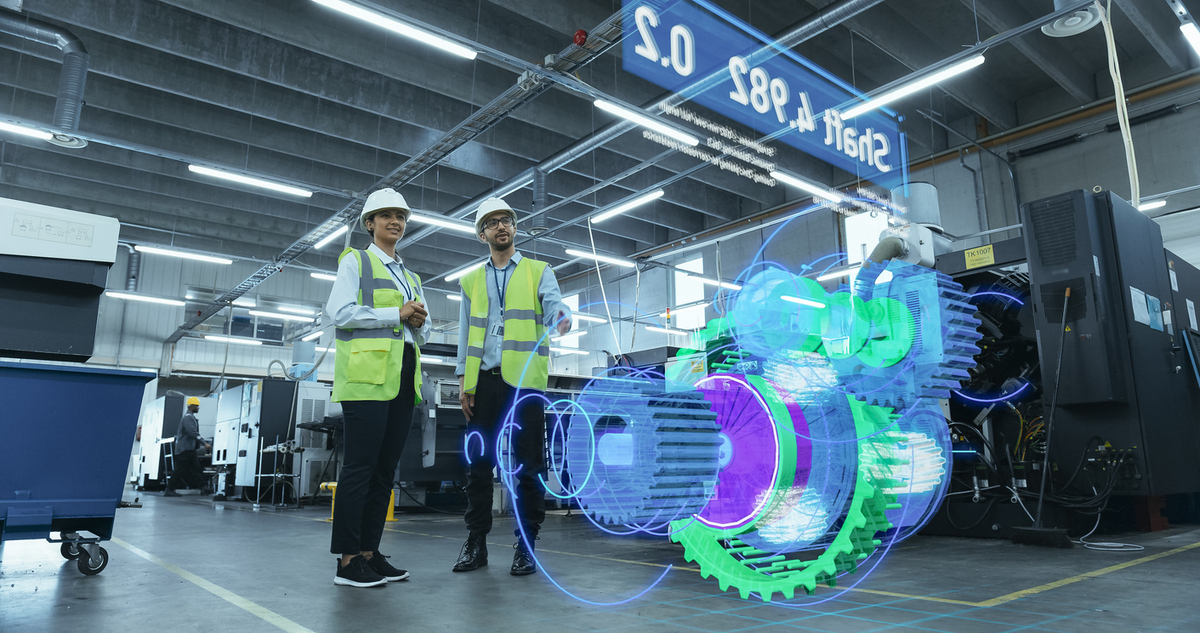
The adoption of digital twins (DTs) and extended reality (XR), which encompasses augmented reality and virtual reality (AR/VR), is accelerating at a rapid pace. With the ability to produce virtual replicas that can simulate real-work scenarios, DTs are becoming invaluable across a host of different sectors, including aerospace and defence, healthcare, smart cities and automotive.
But one of the industries arguably seeing the biggest impact from DT and XR is manufacturing, where these technologies have the potential to deliver numerous efficiency savings and other operational benefits.
Indeed, recent data released by the Institute of Electrical and Electronics Engineers (IEEE) in The Impact of Technology in 2026 report found that the use of DT technology for virtual simulations is set to be a core focus for CIOs, CTOs, IT directors and other technology leaders globally. In fact, XR and robotics are already moving beyond pilots and into day-to-day use across manufacturing and logistics. Worldwide, 77 per cent of technology leaders believe that humanoid robots will become familiar coworkers, with 40 per cent of UK organisations planning to deploy them across parts of their workforce in 2026.
The key benefits for manufacturing
Innovative technologies such as DT and XR have various advantages and huge practical value when employed in manufacturing. For example, most UK respondents (60 per cent) said that XR and DT will be very important for designing, developing and testing prototypes and manufacturing processes.
One of the main advantages of DT is the enhancement of predictive maintenance. When paired with IoT, it allows manufacturers to monitor the real-time condition of machinery and other equipment, enabling them to predict any potential failures before they occur. DT platforms significantly improve manufacturing processes and operations, as various scenarios can be simulated and analysed. Bottlenecks and workflows can be identified and overall efficiency boosted.
XR adds a further enhancement by overlaying digital information from the DT onto the physical world. This enables workers to immersively interact with virtual models of machinery and processes. In fact, it has been proven that VR- and AR-enabled training sessions are not only more effective but also safer.
Both DT and XR technologies have huge potential in improving various processes such as design, prototyping and production, digital workflow, remote assistance, workforce training, inventory manufacturing and workplace safety. Thanks to these advantages, manufacturers’ confidence in these technologies is growing.
The role of AI
The rapid ascendence of AI is expected to significantly enhance XR experiences by enabling more personalised, adaptive and intuitive interactions, alongside improved content creation and real-time data processing. 32 per cent of UK respondents to IEEE’s study expect the manufacturing industry to experience the greatest transformation from AI in 2026, with the biggest impact anticipated across robotics (66 per cent) and DT (20 per cent). AI and XR together are set to lead to enhanced user experiences and intelligent interfaces.
Addressing barriers to adoption
The rise of digital twins, XR and robotics is quietly reshaping how work gets done. What once felt experimental is now part of the day-to-day, from simulating production lines to training new workers in realistic virtual environments. In manufacturing, that means moving from reacting to issues to staying one step ahead and using real-time data to make even smarter decisions.
To enable widespread adoption of these technologies across the manufacturing industry, there are a few challenges that need to be addressed. These include high initial costs, hardware limitations, integration with existing infrastructure, cyber-security considerations, a lack of universal standards and a notable skills-gap.
As these technologies mature, the necessary skills landscape is evolving. Indeed, we can see from IEEE’s research that demand is growing for robotics programming (34 per cent) and machine learning (38 per cent) skills. The rise of humanoid robots, not as novelties, but as valuable co-workers handling repetitive or hazardous tasks, frees up human teams to focus on decision-making, problem-solving and oversight. But for this to work, we need to rethink the way we hire.
The ability to programme a robot or interpret live data from a digital twin is no longer niche, it has become vital. What’s more, the roles that typically relied on manual experience now involve fluency in systems, modelling and automation.
This isn’t about replacing jobs but about reframing them. As the tools scale and become smarter, the workforce must become more agile – and the industries that thrive will be those that invest not just in technology, but in the mindset and skills to harness it.
Through the seamless integration of real-world data and virtual modelling, manufacturers can move from reactive to proactive decision-making. This not only enhances efficiency but also sustainability and innovation, laying the foundation for data-driven, digital transformation in manufacturing.
Ensuring resilient, adaptable, and sustainable manufacturing practices will define the next era of Industry 4.0. Ultimately, the speed and success of this digital transformation will depend on a strong commitment to upskilling the workforce and investing in scalable and secure cloud and computing edge infrastructure.


Business Reporter Team


Most Viewed


Winston House, 3rd Floor, Units 306-309, 2-4 Dollis Park, London, N3 1HF
23-29 Hendon Lane, London, N3 1RT

020 8349 4363

© 2025, Lyonsdown Limited. Business Reporter® is a registered trademark of Lyonsdown Ltd. VAT registration number: 830519543