



Modernisation in the face of AI
Ollie O’Donoughue at Cognizant Research explains why enterprise AI ambitions are outpacing legacy modernisation



Rapid advances in AI have been a shock to the system for many organisations. Racing to drive the most impact in ambitious timelines, leaders want it embedded across operations, customer experience and decision-making. It’s prompted change in many forms, including the acceleration of longer-term technical projects that weren’t previously priorities.
One of these is legacy modernisation. The task of updating or replacing older systems never built for today’s data, security or AI demands, has moved from the backburner to a primary focus. In many businesses, these systems still run core processes. But they are costly to maintain, difficult to change and often poorly documented. The advent of AI makes this evolution non-negotiable.
Business leaders recognise the urgency of legacy modernisation, yet execution is falling short. Cognizant research shows that 85% of senior executives are concerned their existing technology will limit meaningful AI adoption, while nearly eight in ten (79%) say they will not retire even half their technology debt over the next five years.
Using AI effectively relies on clean data, stable platforms and agile systems. Where legacy environments are fragmented or unstable, deploying AI becomes slower, more expensive and harder to scale. Let’s explore how to achieve modernisation while staying ahead of AI-driven change.
Why legacy modernisation is back on the brain
Legacy systems have, by definition, been part of enterprise IT stacks for decades, often left in place because replacing them puts the critical operations they support at risk. AI is now prompting organisations to reconsider that approach. It has moved infrastructure modernisation from a cost and risk discussion, to one of enablement. Can existing systems support data and AI ambitions?
Without committing to infrastructural change, siloed data, unsupported applications and manual processes limit how far AI can be integrated. At the same time, customer demand for AI-enabled products and services is increasing, adding pressure to modernise systems that were never designed to support these use cases.
As a result, many companies have set ambitious plans to ready themselves for exponential AI adoption. Within the next two years, around three-quarters of leaders expect to make substantial progress on modernising legacy infrastructure.
The limits of the two-year plan
Technology debt is often the main factor limiting the progress of modernisation initiatives. This debt builds up over time as systems are patched, extended and integrated rather than replaced, increasing the cost and effort involved.
Taking a snapshot of the current landscape, most firms (93%) have retired 25% or less of their technology debt. Looking ahead, less than one in five (18%) expect to have retired more than half by 2030. Many modernisation plans assume that savings from reducing tech debt will fund future work, but at this rate, those savings are unlikely to arrive quickly enough to support timelines accelerated by AI.
Progress is also slowed by a mix of complexity, skills and budget constraints. Over time, legacy systems are often held together by custom code, point integrations and manual workarounds created to keep things running. As a result, existing systems become harder to understand and change without disruption, even as a significant portion of IT budgets is tied up in maintaining them. Together, these factors make a two-year modernisation timeline difficult for most enterprises to achieve.
Managing the pace of modernisation
In response to market and competitor pressure, businesses often increase the number of AI initiatives they run in parallel. This means new tools are introduced, pilots expand and teams are asked to deliver more while still supporting existing systems.
Where underlying platforms are unstable or outdated, this approach increases cost and delivery risk. It also puts additional strain on already limited skills. In practice, progress tends to slow rather than accelerate. Managing pace, rather than pushing for speed alone, allows organisations to make progress without overstretching teams or budgets.
A practical approach to modernisation
Enterprises that progress modernisation initiatives tend to initially focus on areas where change delivers immediate operational benefit. Improving visibility across systems, reducing manual work and strengthening security are often effective starting points. They are usually less risky than large-scale projects, while freeing up time, budget and attention for more complex work later on.
In manufacturing, this might involve connecting systems to strengthen planning and reduce downtime. In healthcare, it could mean modernising patient records to reduce errors and boost productivity. In each case, the emphasis is on practical changes that make day-to-day tasks easier.
As businesses reduce complexity, it becomes exponentially easier to identify where technology debt sits and address it in more advanced ways. For example, AI can play a more useful role by helping teams understand legacy code, automate documentation and speed up migration work. This reduces reliance on scarce specialist skills and helps modernisation move forward at a more sustainable pace.
These foundations provide crucial building blocks for growth. That includes launching new services, responding faster to customer needs and supporting more advanced AI use cases across the business.
Our insatiable appetite for AI has highlighted long-standing weaknesses in existing systems, but it has also made priorities clearer. Firms that focus on steady improvements to their core systems and align AI integration with the capability of those systems are more likely to make consistent progress over time, regardless of the specific timeline attached. AI is moving fast, and it’s the unglamorous work of legacy modernisation that will decide who pulls ahead.
Ollie O’Donoughue is Senior Director at Cognizant Research
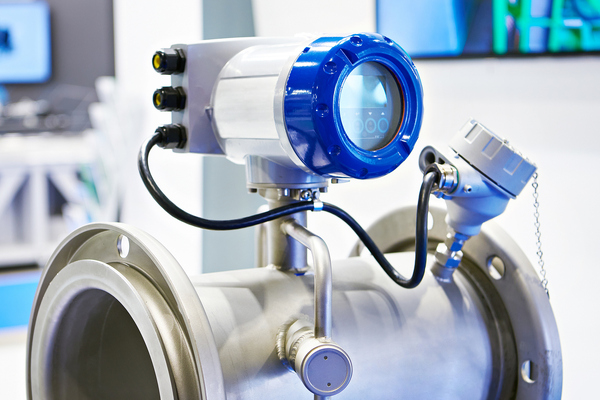
Main image courtesy of iStockPhoto.com and Alexander Sikov

Business Reporter Team


Most Viewed


Winston House, 3rd Floor, Units 306-309, 2-4 Dollis Park, London, N3 1HF
23-29 Hendon Lane, London, N3 1RT

020 8349 4363

© 2025, Lyonsdown Limited. Business Reporter® is a registered trademark of Lyonsdown Ltd. VAT registration number: 830519543